Why residents need to understand both where budget funds were spent and why the community decided to invest in a particular project
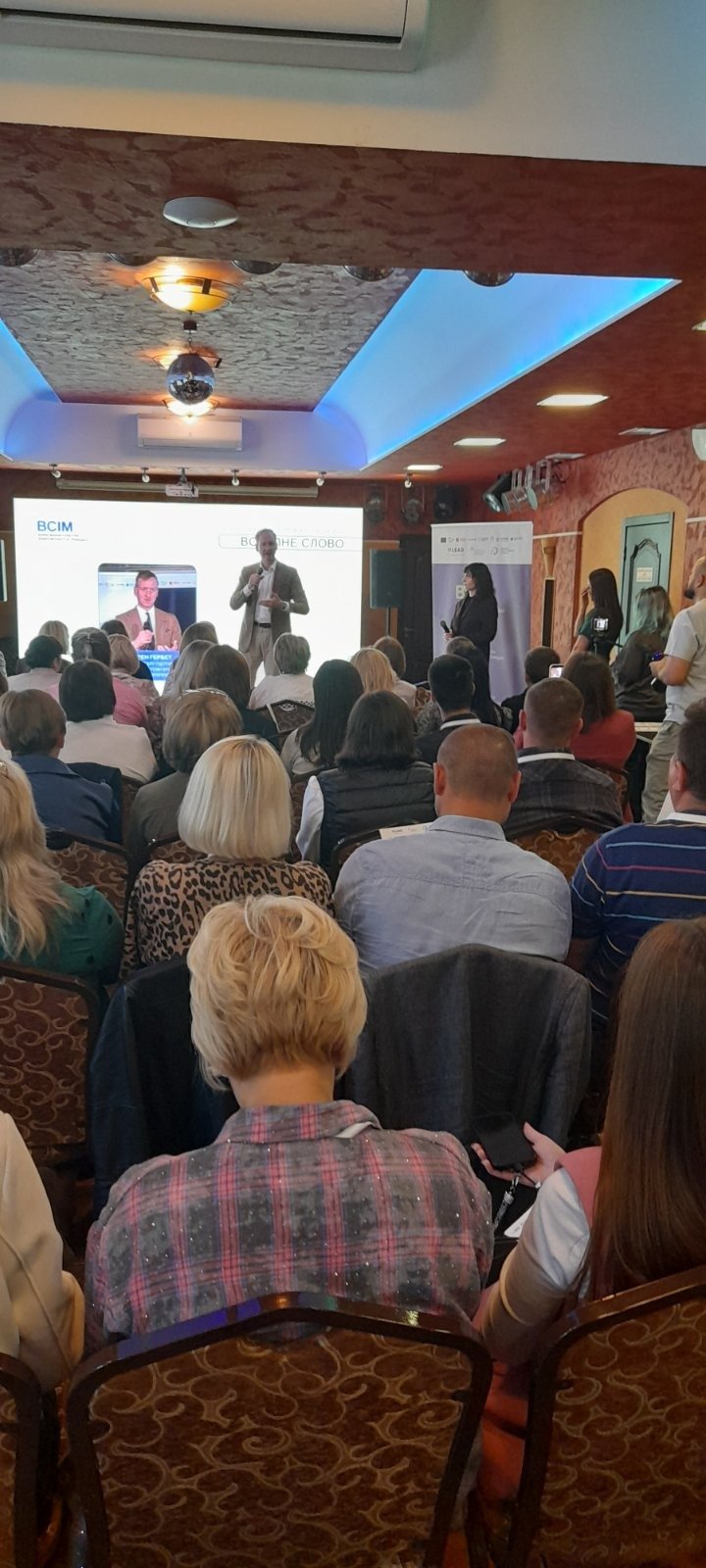
True integrity in a territorial community (hromada) begins long before the first tender is announced on Prozorro. This was the central message of the regional forum “Integrity in the Community: From Principles to Practical Action”, held on 11 September in Lubny. The RCERBS Fund team, which works in its home city and across Ukraine as part of the “Recovery Window” Grand Coalition, joined the discussion to change the conventional view of transparency in reconstruction**.**
The forum featured extensive discussion of corruption prevention, anti-corruption bodies and European experience. Yet every such discussion leaves a very practical question: how can an ordinary resident see integrity in their community’s everyday work?
Asking both “How much was spent?” and “Why did we decide to do this?”
Imagine a typical situation. A community plans to spend a substantial sum on reconstructing a school. Residents can check the procurement on Prozorro, see the winning bidder and the cost of the work, and later monitor the quality of the renovation. This matters, but it is only the final part of the story.
The key questions arise long before the tender:
-
Why did this particular school become the number one priority?
-
How many children will attend it in five or ten years?
-
What does the community currently spend on maintaining it, and what will change after the renovation?
-
Were alternatives considered, and why was reconstruction on this particular scale chosen?
If there are no answers, monitoring only the final stage — procurement — is no longer enough. True integrity in public investment begins long before money reaches the accounts.
The most important decisions are made before funding arrives
We are used to seeing transparency as oversight of money that has already been spent. Yet understanding how a project made it onto the list of priorities in the first place is just as important.
If a community has 30 project ideas but enough resources for only three, why does reconstructing an administrative building take priority over a failing water main? Why build a new facility instead of modernising an existing one? Has anyone calculated how much the new building will cost the budget each year after it is commissioned?
These are questions about the quality of management decisions. A choice made with integrity always rests on data, has a clear justification and follows an open prioritisation process.
The main principle:
Monitoring after money has been spent answers the question: **“What happened?”**.
Transparent project preparation makes it possible to ask much earlier: **“Why are we going to do this?”**
Residents do not need to read 100 pages of documents
Formally, information in communities is often open. Their websites may offer a 180-page development strategy, a Municipal Energy Plan (MEP), the budget and dozens of tables. But an ordinary person will not spend days analysing them.
True transparency means explaining to people in accessible language:
Ideally, this information should remain available at all times rather than disappear after formal public hearings.
Digital tools: How Project Navigator is changing the approach
This is precisely the approach RCERBS specialists are working on through the Project Navigator platform. We aim to move from a conventional, passive “wish list” to a system that makes the project’s entire journey visible:
-
What real problem does it solve?
-
How ready is it for implementation?
-
Which documents or approvals are still missing?
-
What should the community do next?
For a municipality, this is a convenient investment management tool; for a donor, a clear map of project maturity; and for residents, a simple, visual way to monitor both spending and the rationale for public investment.
Integrity cannot simply be “imported”
The forum paid considerable attention to European experience. However, mechanically copying other models without considering the realities of Ukrainian communities rarely delivers results. Blindly transferring other people’s rules is unwise: principles should be adopted and adapted to our circumstances.
For us at the Fund, one of these basic principles is simple: the larger the future investment, the more transparent and understandable the process by which the community decided to undertake it should be.
For the residents of the community first and foremost, as well as for the auditor or donor.
Prepared by Zoia Afonina especially for RCERBS
Photos