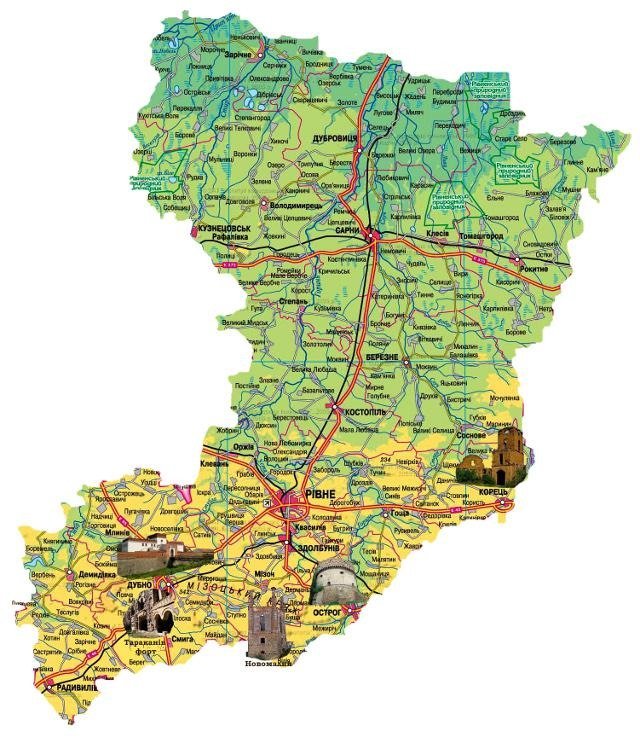

In 2025, the RCERBS Fund in Lubny, together with the Kyiv-based civil society organisation BOTTOM UP, conducted a large-scale study of the institutional capacity of small and medium-sized territorial communities (hromadas) in Rivne Oblast. The assessment was carried out through the PARASOL pilot project with support from Bankwatch Network and Global Greengrants Fund. The study aimed to determine communities’ actual readiness for recovery and development during the war and in the post-war period, and to create a tool for directing international assistance effectively.
Rivne Oblast became the fourth oblast studied in recent years. The region’s 63 communities were analysed across five groups of criteria: organisational, financial, social, infrastructure and communication capacity. A total of 35 indicators provided a comprehensive picture of each community’s situation.
Why Ukraine needs this study
The war has placed communities in entirely new circumstances: damaged infrastructure, insufficient budget resources, staffing shortages and increased pressure on social services. As a result, previous state methodologies have lost their relevance, and communities are increasingly turning to civil society organisations for professional support.
The updated assessment methodology focuses on three key issues:
• the community’s flexibility and ability to adapt to shocks;
• preparedness for emergencies;
• the ability to ensure social and economic resilience.
The rating therefore shows both a community’s current situation and its prospects for making effective use of external resources and international support.
How the assessment was conducted
Because communities’ participation in the survey was low, with only 6% returning forms, specialists had to conduct 94% of the assessment independently, using official websites, budget data, open registers and information on management decisions and infrastructure projects.
The study identified systemic problems:
• outdated or incomplete data on communities’ official resources;
• a lack of updated strategic documents;
• incorrect or inaccessible contact details;
• some officials’ reluctance to provide information due to distrust;
• limited experience of international cooperation and cooperation between communities.
Leaders of the 2025 rating:
The five communities with the highest levels of institutional capacity were:
-
Varash community — 88.89 points
-
Korets — 87.55
-
Dubno — 84.25
-
Bila Krynytsia — 80.96
-
Oleksandriia — 78.81
These communities demonstrate a sound level of organisational work, updated strategies, relatively effective budget management and better communication with residents and partners.
Twenty-three communities (37%) scored 60–80 points, and 28 communities (44%) scored 40–60 points. No community in Rivne Oblast scored below 40 points, indicating that none of the municipalities had critically low capacity.
What the study revealed
The findings show that, despite wartime difficulties, communities in Rivne Oblast have considerable potential for recovery and development. At the same time, there is a clear need to:
• update strategic documents to reflect wartime challenges;
• improve the transparency and timeliness of information on official resources;
• improve staffing capacity and project management systems;
• participate more actively in international programmes and intermunicipal initiatives.
Why this matters to international partners
The study will become a tool for targeting international assistance effectively, specifically by:
• identifying priority projects with the greatest development impact;
• avoiding duplication of funding;
• accelerating the recovery of critical infrastructure;
• strengthening communities’ resilience to future crises.
What next?
The study’s authors propose:
• extending the methodology to other Ukrainian oblasts;
• regularly monitoring changes in communities;
• strengthening cooperation between local self-government bodies, the public and international organisations.
The institutional capacity rating of Rivne Oblast is becoming an important step towards a systematic approach to Ukrainian community development. It will help strengthen their resilience, prepare for post-war recovery and increase communities’ involvement in the changes bringing Ukraine closer to the European Union.
You can view the full rating on the RCERBS Fund’s Facebook page.
https://www.facebook.com/profile.php?id=100090826374329
Photos