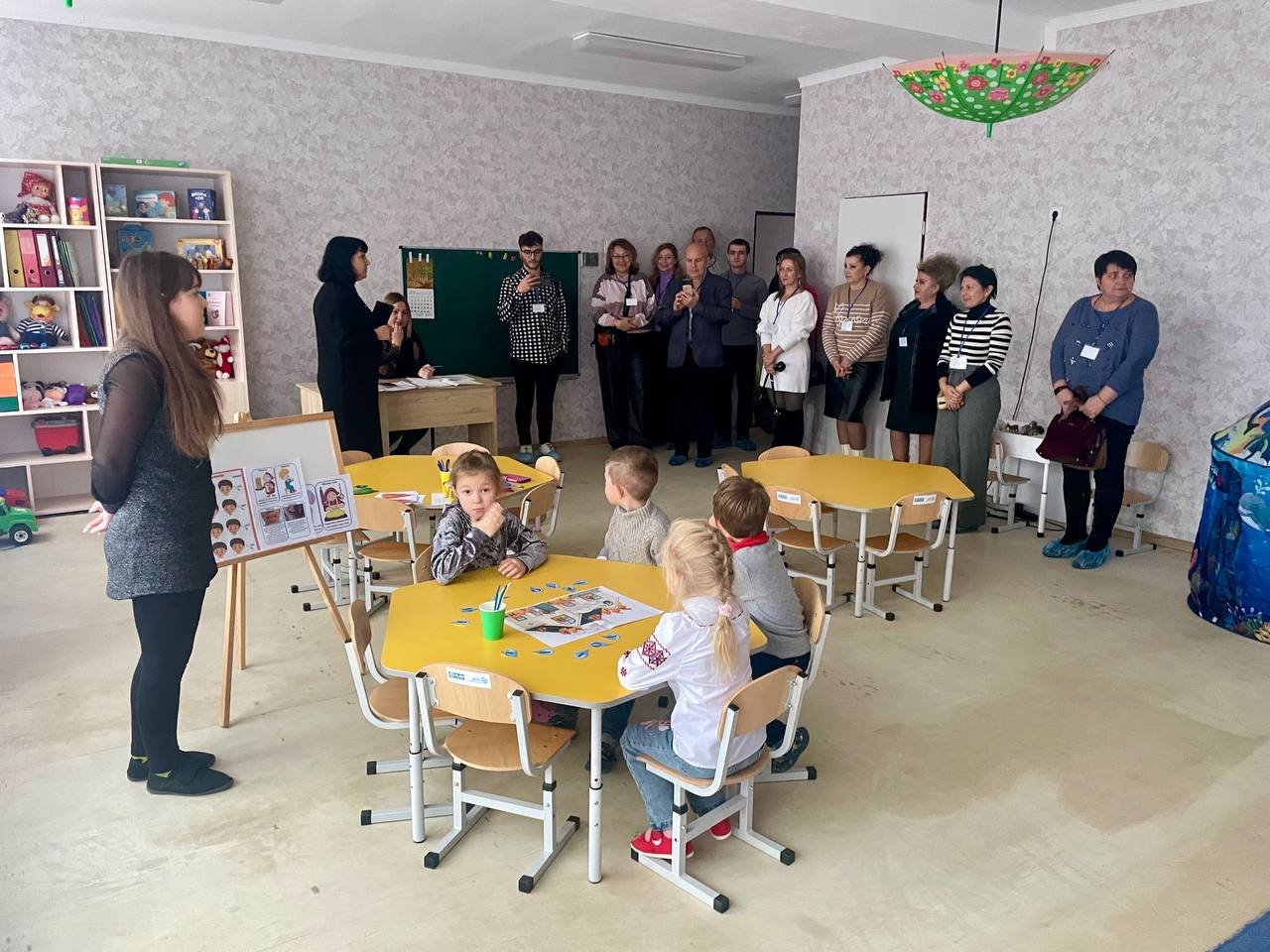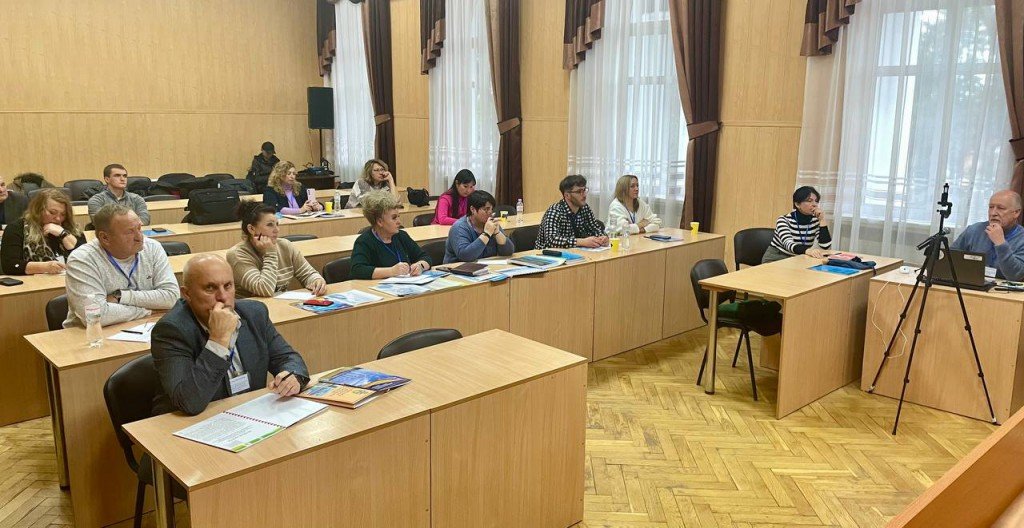
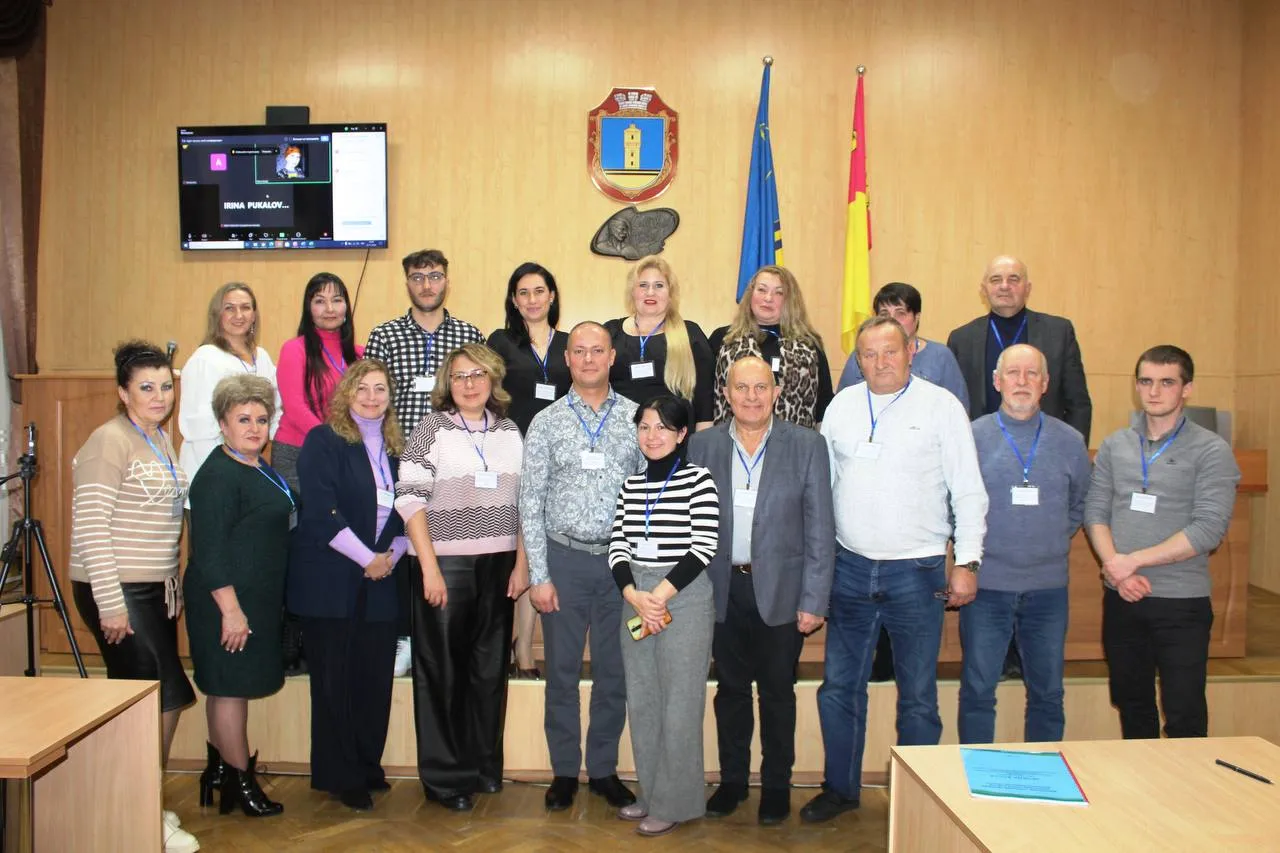
On 21 November, Dolynska territorial community (hromada) in Kirovohrad Oblast welcomed visitors and shared its experience of implementing various projects and finding funding for them. Representatives of Ukraine’s Kirovohrad, Dnipropetrovsk and Odesa Oblasts, civil society organisations (NGOs) and donors met in Dolynska during a PARASOL project study visit.
Our mission is a community of happy people
Ukraine’s recovery is widely discussed at both Ukrainian and international forums. It is often seen as something that lies in the future and requires substantial investment. Meanwhile, the small, active and creative community of Dolynska in Kirovohrad Oblast is already finding funding for development and reconstruction and putting bold ideas into practice. Dolynska’s residents dream of living in a truly European town and are ready to invest in their future. A key source of inspiration is community head Yevhenii Zvizdovskyi, who describes his main mission as creating a community of happy people, with considerable attention paid to the future and the younger generation.
“Our urban territorial community turned four on 27 November. For almost three of those years, like countless other communities in Ukraine, we have suffered constant threats from the Russian aggressor,” says Yevhenii Zvizdovskyi. “Every day, we work to support internally displaced persons (IDPs) from Kherson, Donetsk and other oblasts. In today’s circumstances, our goals and purpose are to identify and mobilise as fully as possible the community’s internal financial and human resources, and only then seek external resources. We are ready for open dialogue with investors, donors and benefactors, and we aim to achieve the best possible results in all our initiatives.”
Dolynska community took over large local long-unfinished construction projects from state ownership into municipal ownership, developed a development plan and has completed many successful projects over the past four years. These include restoring housing, with 150 flats already allocated to the families of the community’s fallen heroes and plans to provide a further 350 flats. The community has built its own water main, supplying more than 10,000 people, and five drinking-water points. It has established an emergency medical service that has already responded to more than 8,000 calls. A Ukrainian church has been built in Dolynska. Work is now being completed on restoring the Sports Palace, covering around 3,000 square metres.
Small communities’ successes are the foundation for Ukraine’s recovery
Dolynska community readily shares its experience with other communities. During the study tour to Dolynska, participants learned about the implementation of energy saving and energy efficiency projects, explored progress on solar and wind energy projects, the restoration of the community’s residential buildings and structures, and the renovation of sports and dance facilities for children and young people. Participants also had an opportunity to learn from Dolynska’s experience of attracting foreign investment for solar and wind energy projects. Such projects are particularly important during the war because they will help create the conditions for decentralised community energy supply and independence from major energy suppliers. Dolynska community head Mr Zvizdovskyi also shared the community’s plans for the near future, covering attracting businesses and establishing new enterprises, developing municipal electric road transport, waste management, water supply and wastewater services.
This is how a strong foundation for Ukraine’s recovery is being laid at local level. Ruslan Shcherbakov, President of the Fund “Regional Center for Economic Research and Business Support” (RCERBS), highlighted Ukrainian communities’ ability to show extraordinary creativity in finding ways to develop and support their residents during the war. “Our organisation systematically studies community experience and helps disseminate best practices. We see Ukrainian communities introducing innovative solutions despite the war, particularly in energy efficiency, renewable energy and social infrastructure. Combining the efforts of communities, civil society organisations and donors is a key factor in successfully implementing development projects. Working together makes it possible to use resources more effectively and achieve synergies.” Mr Shcherbakov proposed creating a platform for exchanging experience, attracting investment and jointly implementing projects that will support community recovery and development.
Another study tour participant, Mariia Lukianova, a specialist in greening investments at Ecoaction/Bankwatch, also shared her thoughts: “Dolynska’s leadership takes impressive approaches to mobilising the community’s internal resources and making unconventional decisions based on opportunities already available to local self-government within the national legal framework. Study visits like this are extremely important in helping communities find inspiration for addressing their local challenges and, above all, network with one another. During our first visit, communities identified shared needs for their future development and expressed their readiness to work together to seek funding. Strengthening small communities’ capacity through joint project development and implementation, in cooperation with civil society organisations, could be an effective way to attract donors.”.
Olena Vusyk, head of the civil society organisation “Centre for International Cooperation and Project Implementation”, emphasised that local communities constantly need expert, technical and financial assistance and support. “Military threats and destruction in communities only increase this need,” said Olena Vusyk. “Communities are also responsible for sheltering internally displaced persons and providing them with temporary accommodation and support. On the one hand, proactive communities seek this assistance and support; on the other, foreign donors and investors are ready to invest in financial and technical support for our communities, even amid active hostilities. Our goal is therefore to build bridges between communities, donors and the public, bringing them together to jointly implement green recovery projects and measures.”
In conclusion, all communities participating in the study tour, together with civil society and donors, expressed their willingness and readiness to seek funding jointly, including funds from the World Bank, Japanese companies and donors, to implement a package of joint projects and measures in 2025. This publication was prepared within the project “Study Tour to Dolynska, Kirovohrad Oblast, within the PARASOL Project”, implemented by partner organisations — the Fund “Regional Center for Economic Research and Business Support” and the Centre for International Cooperation and Project Implementation — with support from Bankwatch Network.
Photos