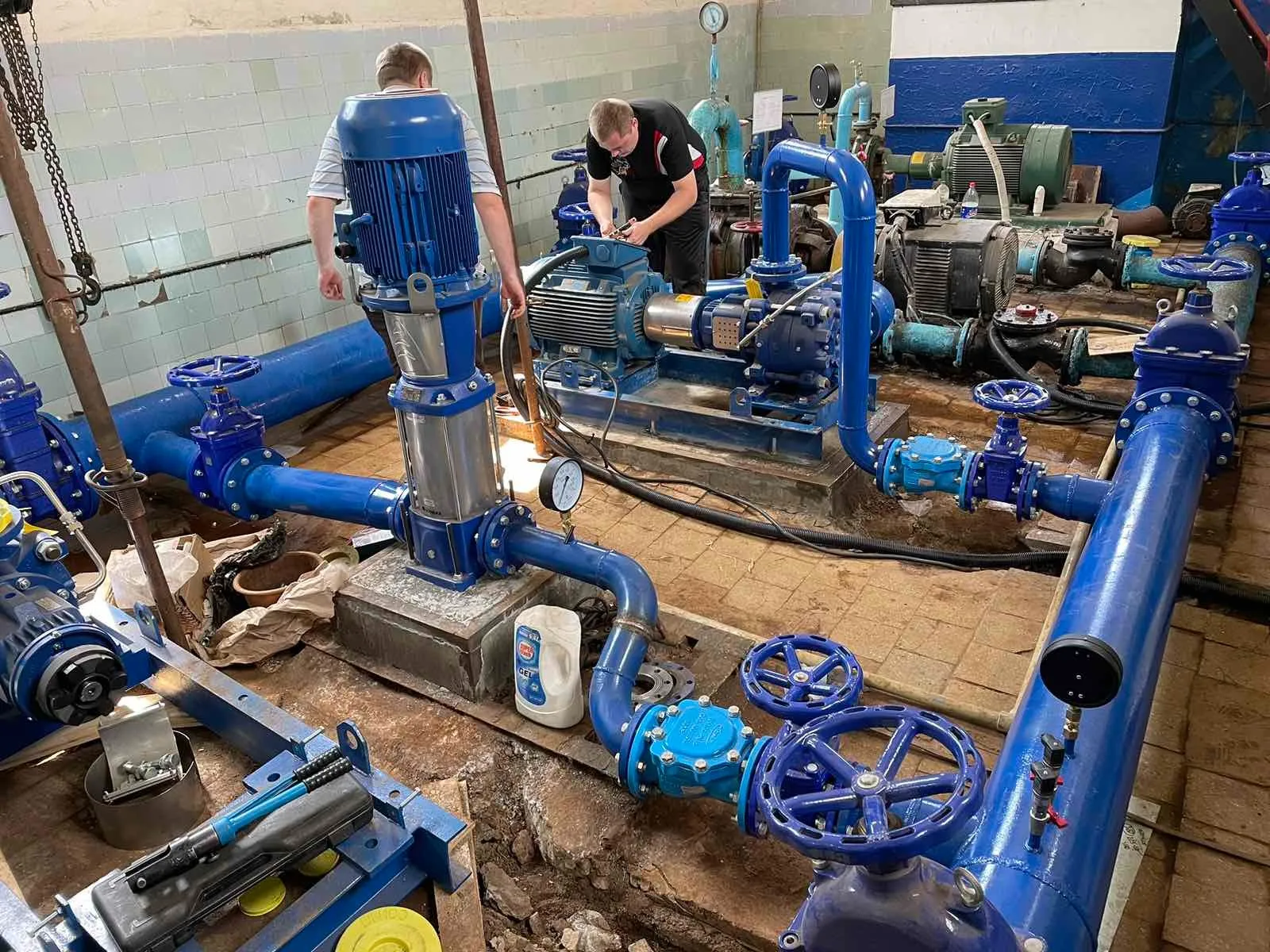
Water is life. War, infrastructure destruction and climate change have created an unprecedented challenge for water supply. Finding effective solutions for the recovery and sustainable development of these systems is therefore one of the most important tasks in rebuilding.
We tried to understand the problem by asking various experts and industry specialists. We divided their perspectives into three broad categories: the state, the project manager and the technical implementer.
HOW THE RECOVERY AGENCY HELPS
Here is the Recovery Agency’s view of the situation:
“The problem has become particularly acute in regions affected by active hostilities.
The State Agency for Restoration and Infrastructure Development of Ukraine is working to address it. One priority is building new systems and modernising existing ones. A prominent example is the project in Mykolaiv, where more than 200,000 residents have had no access to centralised water supply for over two years.
The new trunk water pipeline, whose construction has begun, will supply quality drinking water to the city’s central and southern districts by autumn next year. Alongside the pipeline itself, a treatment system is essential to ensure that the water delivered through the new pipes is of good quality and safe to drink. The Agency is helping Mykolaiv develop solutions for building treatment facilities. This is a necessary condition for bringing the system into operation.
Construction of the pipeline has already begun, and city residents should have access to water by autumn next year. Alongside the pipeline, solutions are being developed to reduce water losses in the networks, which currently reach up to 60%. The Agency also plans to install three solar power plants at pumping stations, reducing the cost of water for Mykolaiv residents by 15%.”
The Agency also works with territorial communities (hromadas) in other regions.
“For example, the Agency’s Head, Serhii Sukhomlyn, and Minister for Communities and Territories Development Oleksii Kuleba held a meeting in Tomakivka, Dnipropetrovsk Oblast, where more than 30,000 people remain without a stable water supply because of the destruction of the Kakhovka Hydroelectric Power Plant. Together with local authorities and international partners, they discussed a comprehensive approach to solving the problem: building a filtration station to treat water and creating a new water supply system based on the Zaporizhzhia–Tomakivka–Marhanets pipeline. This approach aims to give people long-term access to quality water.
One of the stations forming part of the Zaporizhzhia–Tomakivka–Marhanets pipeline. Photo from the State Recovery Agency’s Facebook page
In addition to projects implemented directly by the Agency, the state has introduced large-scale programmes to improve water supply.
The Cabinet of Ministers approved the Programme for Comprehensive Water Supply to Territories Affected by the War. It covers nine oblasts, including Dnipropetrovsk, Mykolaiv, Zaporizhzhia, Kharkiv and Kherson. The programme provides for new water pipelines, reconstruction and major repairs of hydraulic structures, riverbed clearance and the construction of artesian wells. According to forecasts, two million Ukrainians will gain access to water by the end of 2025.
Another important step is the government-approved State Targeted Water Supply Programme, which will run until 2030. It provides for the construction of
-
86 pumping stations;
-
13 water towers;
-
one treatment facility;
-
more than 3,000 kilometres of shared water pipelines.
It also includes drilling new wells and searching for potable groundwater. This is critically important for Kherson Oblast, where 54 artesian wells are planned.”
EXPERT ADVICE FOR COMMUNITIES
Serhii Karelin: a professional approach matters most
We put three main questions to Serhii Karelin, an expert with UNDP in Ukraine.
— Serhii, what should communities do first to ensure a stable water supply?
— This is a fairly complex issue, but the main points, briefly, are:
-
Improve the qualifications of municipal enterprise staff. Basic education alone is no longer enough; staff need to study successful current practice.
-
Develop a complete understanding of how the system works and how its characteristics relate to those of the equipment. Ideally, have a hydraulic model of the system.
-
Find solutions to optimise the system’s operation and add independent energy sources. Automate operations as much as possible to reduce the influence of the human factor.
-
Maintain an adequate stock of essential spare parts, materials and even some equipment.
-
Monitor the system’s condition continuously, ideally automatically, to respond quickly to emerging problems. Preventing a problem is always easier than dealing with its consequences.
-
Work out possible operating modes for emergencies, planning and preparing for minimal water consumption that meets only essential critical needs.
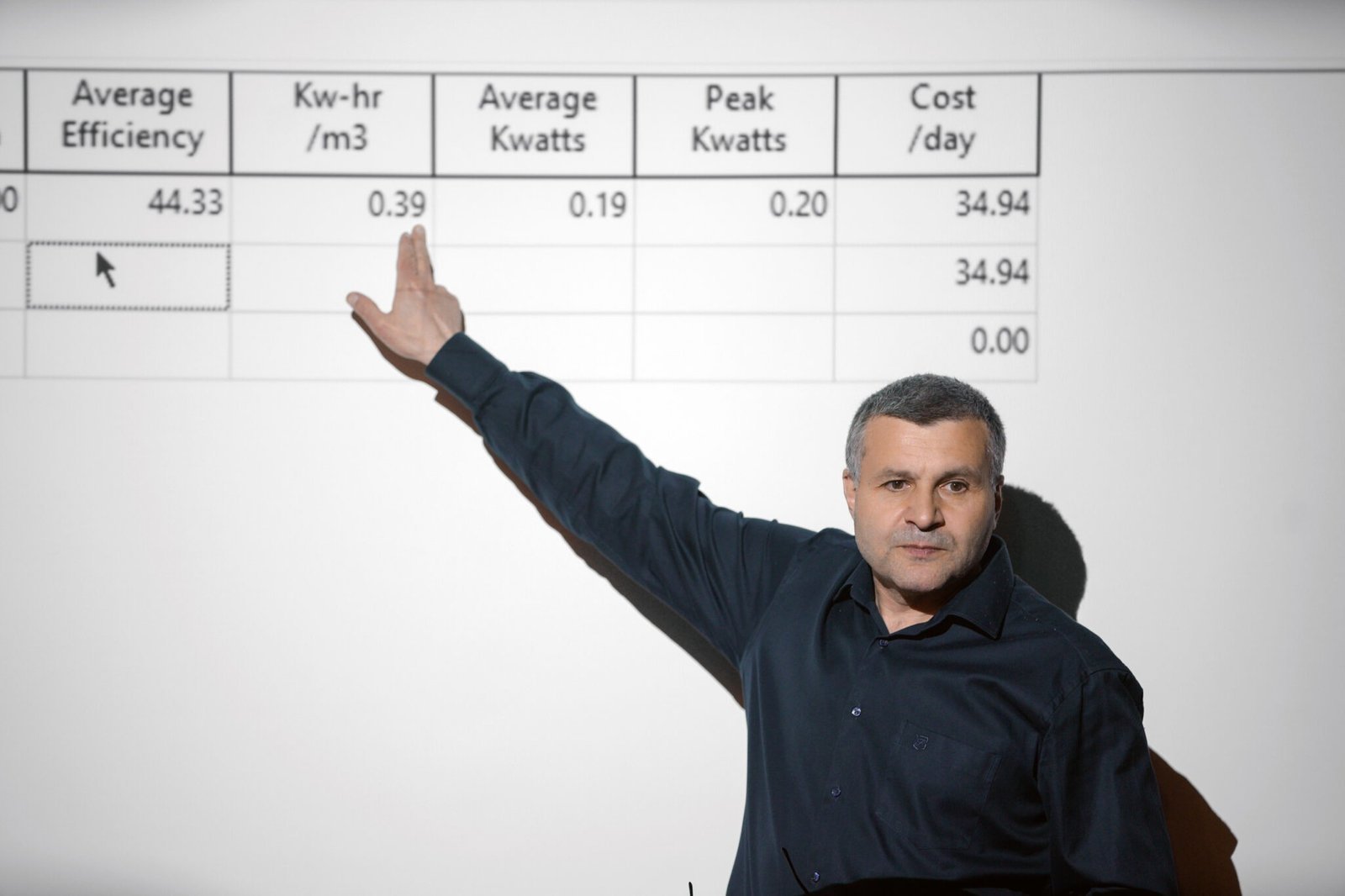
Serhii Karelin, an expert with UNDP in Ukraine. Photo provided by Ruslan Shcherbakov
A hydraulic model is software that brings together all information about a network and its components in a single electronic database and simulates the system’s behaviour when changes are made.
— Which projects do you consider the least expensive for communities while still being highly effective?
— Experience confirms that pumping equipment operates very inefficiently across the country, even at experienced large water utilities with “highly qualified” engineering teams. Few people understand that certain local modifications to electrical equipment can turn the most energy-efficient pump into the least efficient one if the pump’s characteristics do not match consumption patterns.
For this reason, projects that improve energy efficiency by optimising pumping station operations are among the quickest to implement and pay back. I have extensive experience of pumping station upgrades with payback periods ranging from three months to one year.
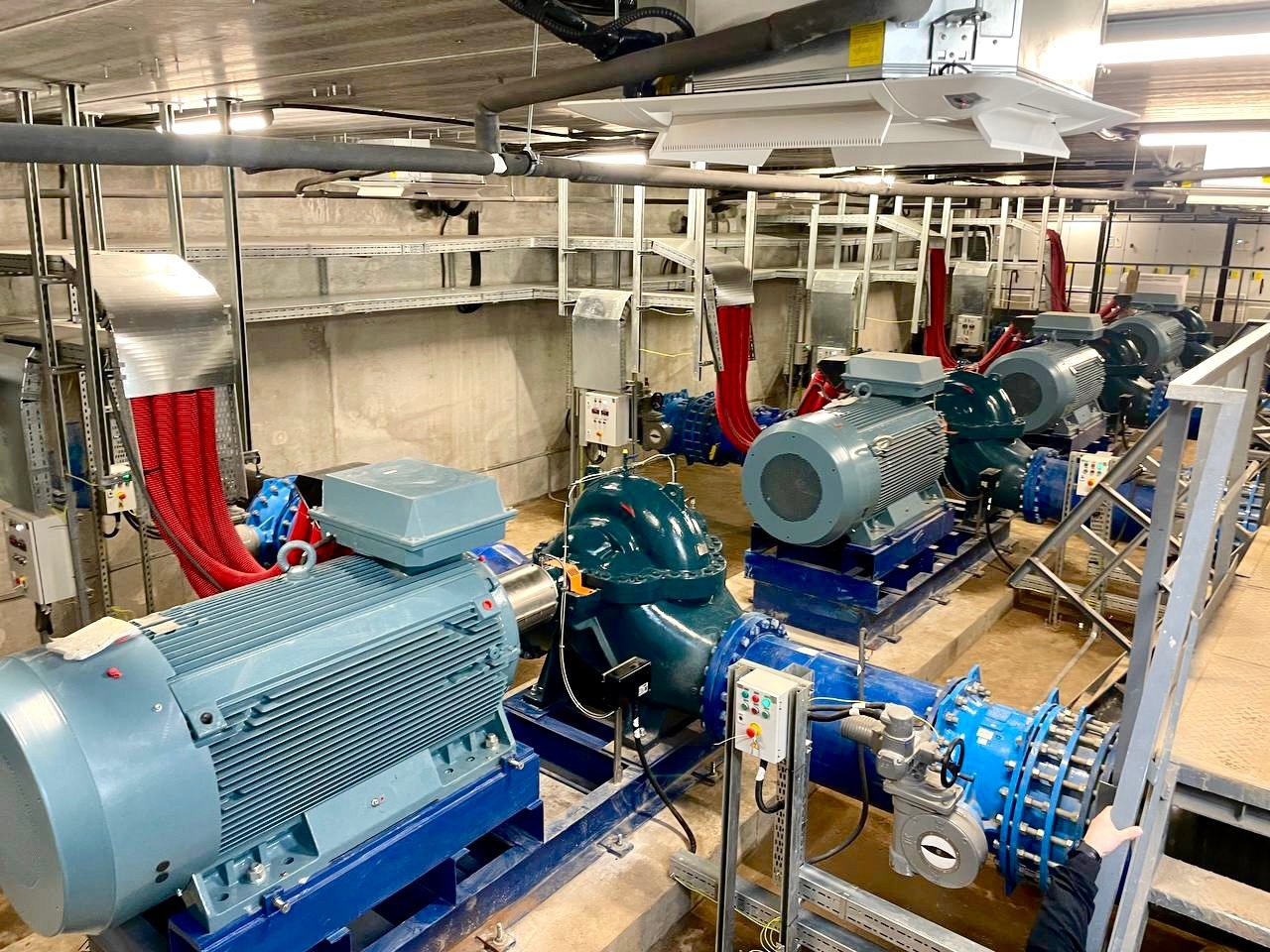
Energy-efficient pumps. Photo provided by Ruslan Shcherbakov
Here are examples of successful projects:
-
Routine repairs at the “Zhelezka” water pumping station of the municipal enterprise “Haivoronskyi Komunalnyk” in Haivoron, Kirovohrad Oblast. After hydraulic calculations and replacement of the hydraulic system and equipment, energy cost savings reached 40%.
-
Following work at third-stage booster pumping stations No. 1 and No. 2 of the municipal enterprise “Lubny-vodokanal” in Poltava Oblast, energy consumption savings were 48% at station No. 1 and 76.8% at station No. 2.
-
A new pumping unit was installed at Znamianka water pumping station No. 2: a pump and an automatic control station with a frequency converter. Energy cost savings were 47.8%.
-
At the Lelekivka well water intake of the Regional Municipal Production Enterprise “Dnipro-Kirovohrad”, pumping equipment and automatic control stations were replaced. Average daily energy consumption in summer was 737 kW; after reconstruction, it averages 177 kW per day. Savings are 75.9%!!!
— What would you advise communities that lack quality drinking water for residents?
— First of all, I would advise involving specialists, who should not be confused with salespeople or managers. Poor water quality may be caused by the source or by secondary contamination in the pipe, including contamination due to low water flow velocities. These causes need to be distinguished, as they require different solutions. Similarly, reverse osmosis is not always necessary when simpler technologies can resolve water quality problems. But every task must be addressed professionally. This is currently the greatest difficulty: commercial interests outweigh engineering and technology.
Viktor Medvediev: a range of measures can prevent energy waste
Viktor Medvediev, a technical expert with the PARASOL project, has worked for more than five years on similar projects implemented by NEFCO in Ukraine. He also shared his advice on energy security for communities:
— There are two ways to address this issue.
-
Install powerful generators at facilities. However, both the generators themselves and the fuel they require are expensive. This is an emergency measure and a short-term solution.
-
Implement a range of measures to prevent energy waste, thereby reducing the load on the country’s power supply system and ensuring uninterrupted services.
In particular, low-cost energy-saving measures include
-
Monitoring and recording consumption at municipal enterprises through energy management. This can reduce costs by up to 10%;
-
Encouraging residents and enterprise staff to take an interest in energy saving. Educational activities, especially for schoolchildren and preschoolers, awareness-raising among community residents and similar measures can save up to 3%;
-
Studying successful practices of peers in other communities and experience from other countries;
-
Creating a hydraulic model of the water supply and wastewater system. This makes it possible to obtain a clear “diagnosis”.
Medium-cost energy-saving measures include
-
Installing modern energy-efficient pumps, providing savings of up to 20%;
-
Replacing pipes made from traditional materials with polymer pipes. Network service life increases several times over, while power requirements fall by up to 20%;
-
Introducing automated control systems and SCADA (supervisory control and data acquisition) systems. This enables remote monitoring of facilities and automatic system control to achieve the lowest energy cost of the technological process, with all process parameters displayed in real time. These measures provide resource savings of around 20%;
-
Reconstructing the aeration system. Installing modern systems can reduce costs by up to 25%.
A recent example from my experience: I am working on improving water use in Lubny community. The project is being implemented during the full-scale war. Compared with 2022 figures, total electricity consumption savings following the work have already reached 283,001 kW.
— What should rural communities do with Rozhnovskyi water towers that are now functionally outdated? How should they deal with climate change and human-made disasters such as the destruction of the Kakhovka dam, which have irreversible consequences? Where can communities obtain clean water when even non-potable water is in short supply?
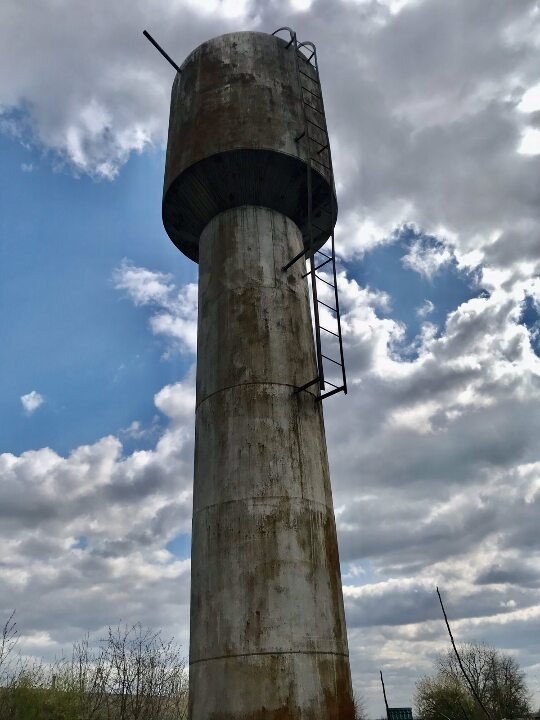
This Rozhnovskyi water tower was put up for auction in Chernivtsi Oblast in 2020 with a starting price of UAH 15,000. Photo from setam.net.ua
— Here are some brief answers:
-
Rozhnovskyi towers can be modernised and used as water storage tanks. Solar panels or wind turbines can be installed on them to power pumps. The towers can be integrated into an automated water supply control system.
-
Collecting rainwater for non-potable uses, such as watering and washing, will reduce pressure on centralised water supply. Membrane water treatment technologies and smart management systems are also solutions.
-
Finding new groundwater sources and equipping wells is a capital-intensive but long-term option.
-
Restoring and modernising existing water pipelines, pumping stations and treatment facilities.
-
Using modern technologies to treat water from different sources, including rivers, lakes and ponds.
-
Creating small local systems serving individual buildings or small population groups.
The Kuchlbauer Tower in Germany is one of the world’s unusual water towers that attract tourists. Photo from open sources
As we can see, Ukraine has successful projects implemented both with communities’ own funding and with grants from international donors. This article cannot describe every possible solution offered by specialists.
But we can see that solutions exist, and communities and their leaders need the will to implement them.
Water supply in communities is a complex issue that requires joint efforts by the state, local authorities, communities and international partners.
Solving it requires improving staff qualifications, modernising infrastructure, introducing energy-saving technologies, engaging specialists and developing long-term strategies for the sector.
Above all, joint efforts matter. This is the only way to provide every community with quality drinking water.
Ruslan Shcherbakov, writing especially for Recovery Window
Photos