

Waste Management Digitalisation: How "Project Navigator" Built the Foundation for the Extraversion of Green SMEs
4/7/20262 min read
Exclusive Material for the NET ZERO SMEs Project
Ukrainian municipalities (hromadas) have officially entered a "one-year race." Following the approval of Regional Waste Management Plans, local authorities have exactly 12 months to develop and adopt their own Local Waste Management Plans (LWMP/МПУВ). Within the framework of the NET ZERO SMEs project, this process is viewed not merely as a bureaucratic requirement, but as a strategic window of opportunity to involve small and medium-sized enterprises in the "green" recovery.
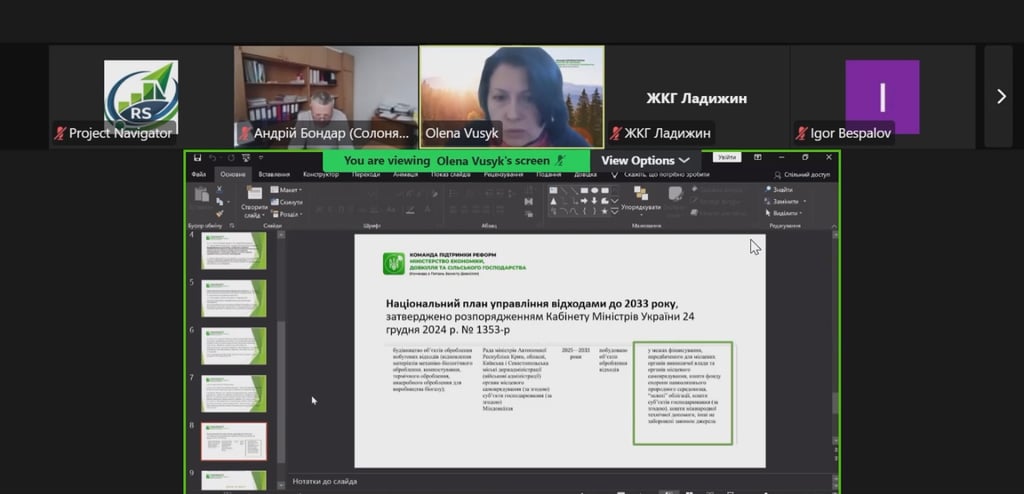
During the latest March webinar—which brought together over 40 key stakeholders, including leading scientists, municipal heads, and green SME owners—a clear demand was formulated: the digital transformation of public authorities must become the foundation for the extraversion (outward orientation) of Ukrainian business.
Digital Requirements: From "Paper" to Investment Assets
Participants identified three critical data requirements essential for stimulating the growth of net-zero SMEs:
Machine-readability and Structuring: Data from LWMPs and Strategic Environmental Assessments (SEA/СЕО) cannot remain in static PDF formats. For the "Project Navigator" (PN) platform to automatically "match" municipal needs with SME capacities, data must be structured (JSON/CSV).
Standardisation for Global Markets: To facilitate extraversion, municipal data on waste and emissions must be collected using the ISO 14064 methodology. This allows Ukrainian SMEs to provide services recognized by international donors and banks.
Dynamic Connectivity (Real-time Data): Infrastructure must support real-time data transmission. This enables SMEs to demonstrate "live" energy efficiency or recycling volume charts to foreign investors.
Infrastructure of Trust: The Role of "Project Navigator"
The RcErBs Fund, drawing on its 23-year experience and a database of 136 strategic documents, is transforming the PN into a comprehensive digital ecosystem. The core infrastructural tasks agreed upon by the workshop participants include:
Interoperability: The PN must automatically interact with state registries and European environmental platforms. This removes administrative barriers for SMEs preparing for CBAM (Carbon Border Adjustment Mechanism) requirements.
Digital Project Passports: Every object in the PN receives a verified digital profile. For a "green" SME, this serves as a ready-made Case Study for exporting their technologies to the EU.
Cybersecurity: Given the work with critical infrastructure, data protection is the #1 priority to ensure the trust of international partners.
Conclusion: Scaling the Experience
The main takeaway from the meeting of scientists and practitioners is clear: the extraversion of net-zero SMEs directly depends on the quality of the digital transformation of public authorities. We are not just writing plans—we are creating a digital infrastructure that makes Ukrainian municipalities transparent and Ukrainian SMEs competitive on the global market.
Our Fund is ready to share this model, methodology, and IT solutions with international colleagues who seek to implement similar decarbonisation mechanisms in their own countries.
This material was prepared within the framework of the NET ZERO SMEs project based on webinar results and expert consultations.